

ONLINE COURSE
ONLINE COURSE
OWNTOP — THE SCIENCE OF MOUNTAIN PREPARATION
A foundational online course for mountain and trekking preparation based on a unique 10-step methodology
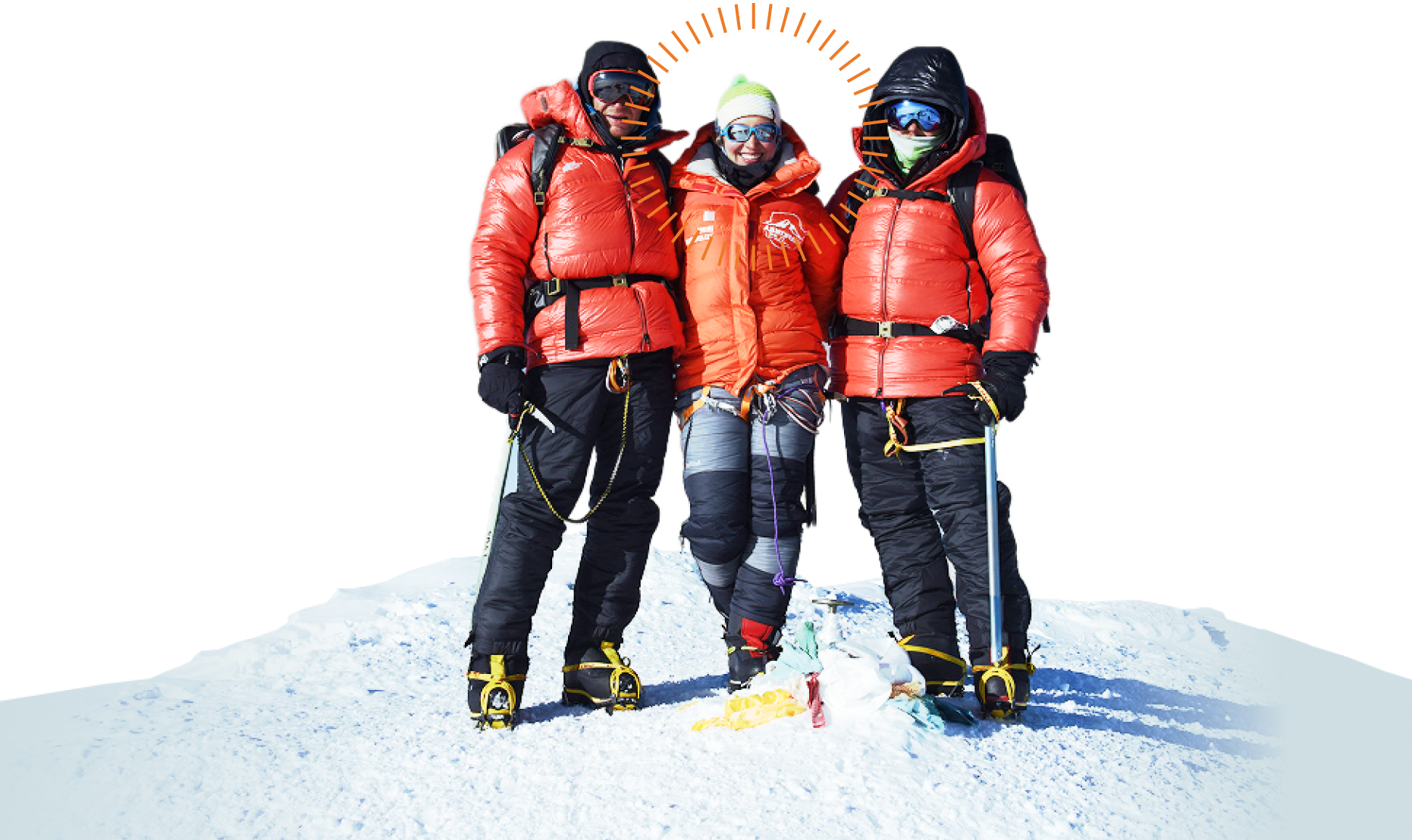
THE PROGRAM WILL PREPARE EVEN COMPLETE BEGINNERS
and answer every question you may have


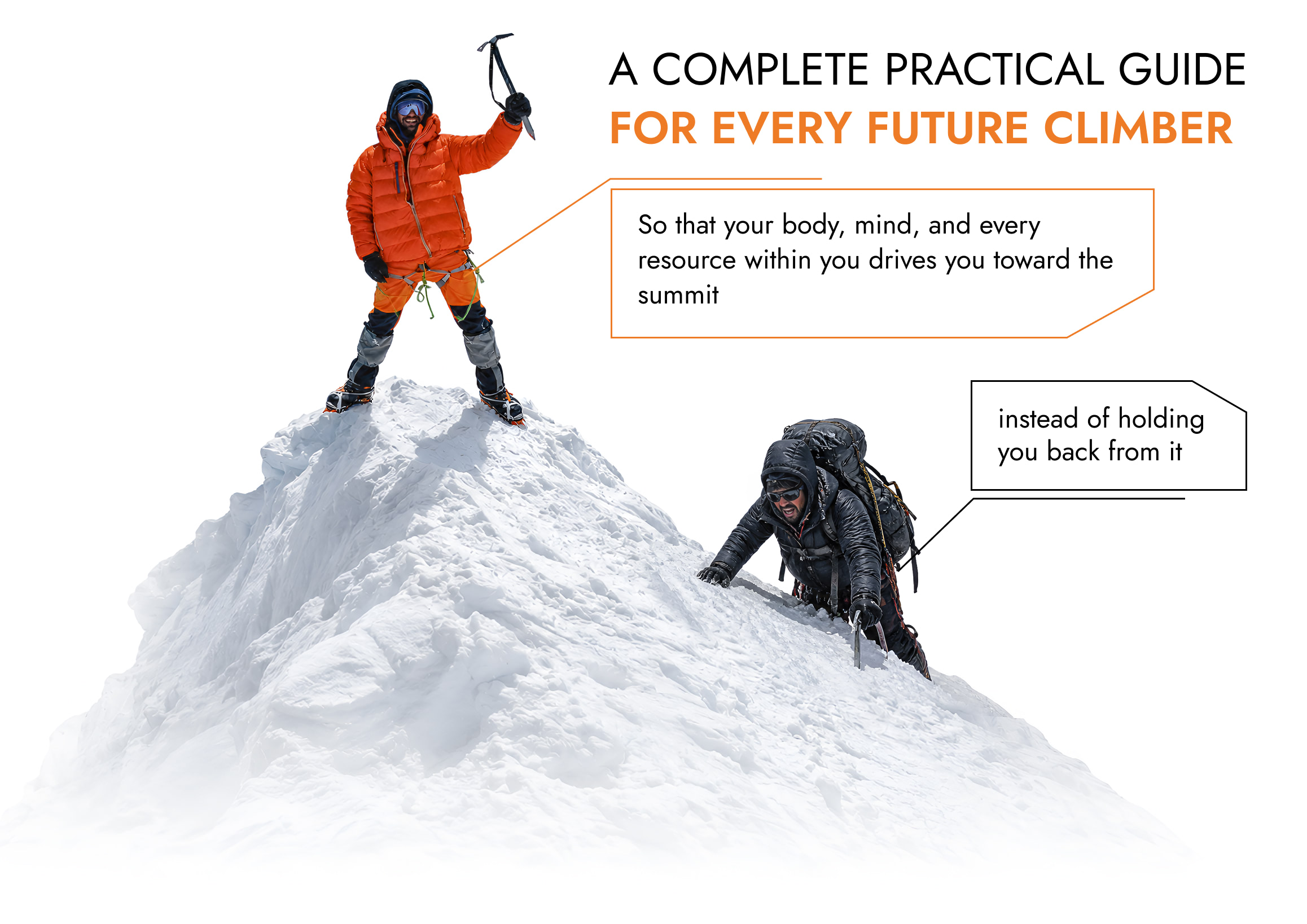
A COMPLETE PRACTICAL GUIDE FOR EVERY FUTURE CLIMBER
WHAT'S INSIDE THE PROGRAM
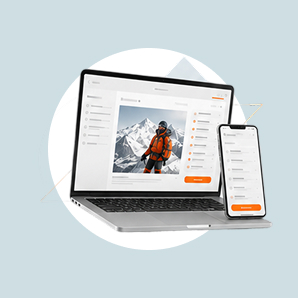
10 modules with video lessons, practical guidance, and reference materials
A physical training plan specifically designed for mountain preparation

An extended Mountain Readiness Assessment
A health screening checklist to help identify potential contraindications and risk factors before you begin
An altitude self-assessment protocol — how to monitor your condition and recognize warning signs
Practical strategies to support acclimatization and reduce the risk of altitude illness
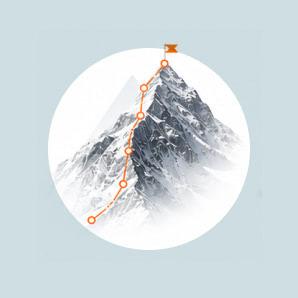
A breakdown of the record-setting 3-day Everest ascent — completed without traditional on-mountain acclimatization rotations
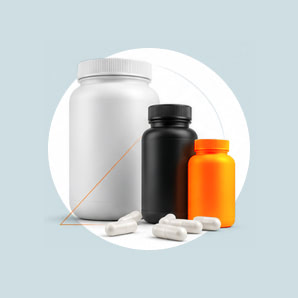
Supplement recommendations to support training, recovery, and performance
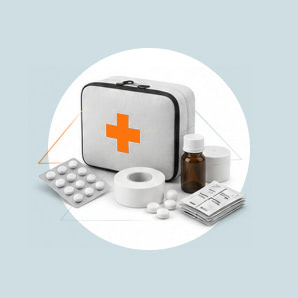
A complete mountain first-aid kit checklist
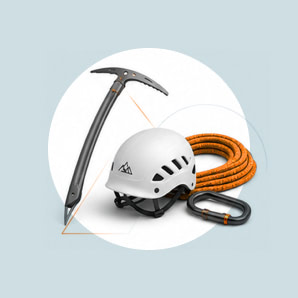
A full gear review with examples from leading outdoor equipment brands and retailers
A post-climb recovery protocol
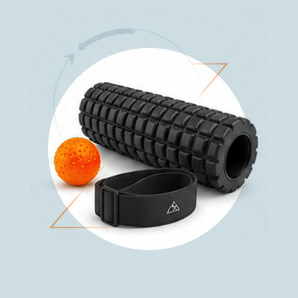
6-month access to all program materials


Bonus live sessions with world-class alpinists, including Mingma David Sherpa
A dedicated module on women’s health at altitude
A dedicated module for climbers aged 50+
THE OWNTOP 10-STEP MOUNTAIN PREPARATION FRAMEWORK
A structured approach to the key components of mountain and high-altitude preparation.
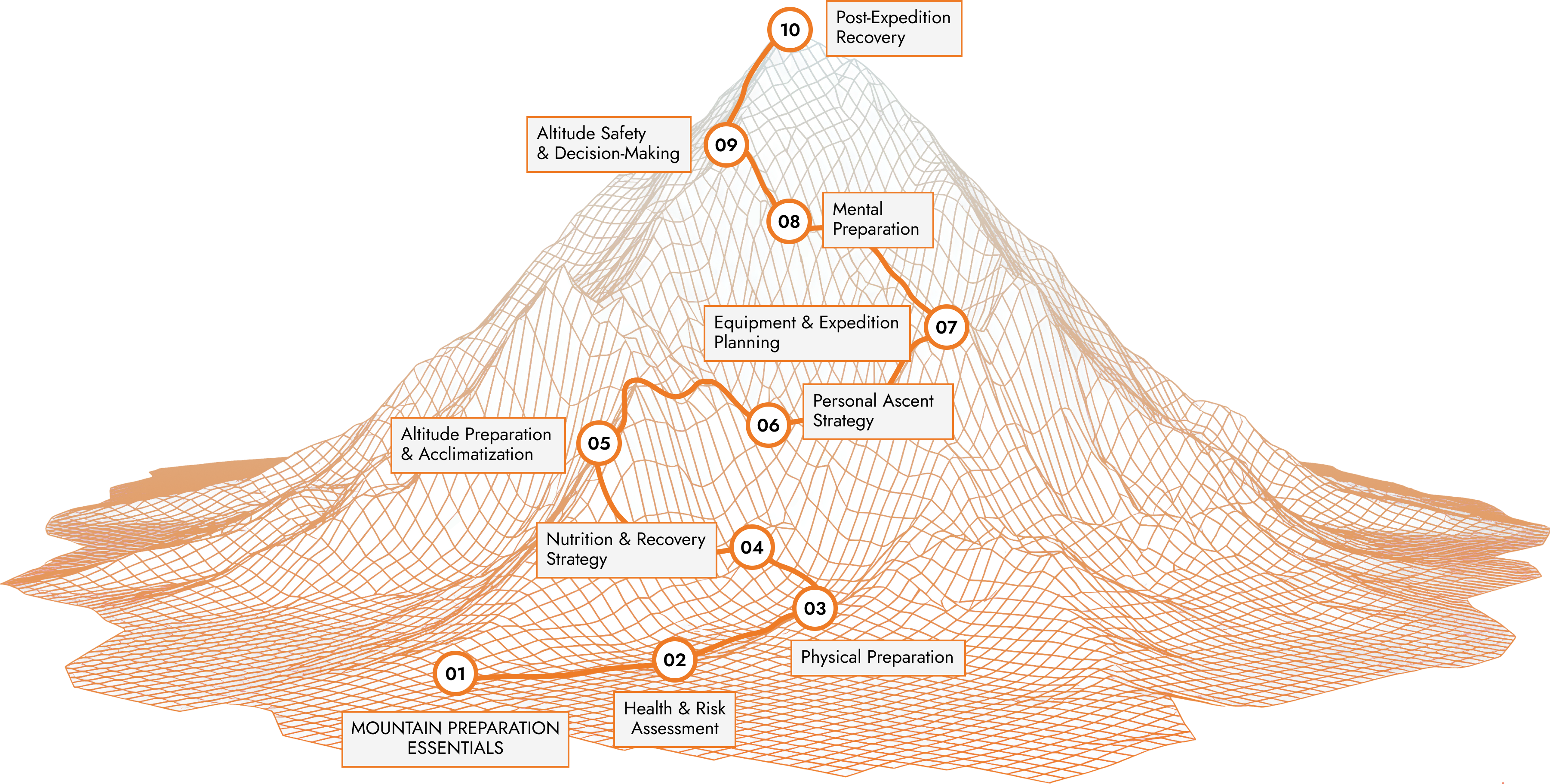


THE OWNTOP 10-STEP MOUNTAIN PREPARATION FRAMEWORK
The same methodology trusted by record-setting mountaineers,
Olympic athletes,
and professional sports teams.


Более
PEOPLE HAVE ALREADY COMPLETED THE PROGRAM
ONLINE COURSE
ONLINE COURSE
OWNTOP — THE SCIENCE OF MOUNTAIN PREPARATION
A foundational online course for mountain and trekking preparation based on a unique 10-step methodology
300 USD
WHAT OUR PARTICIPANTS SAY
BEFORE
Good endurance overall, but altitude sickness hit hard. No summits yet — only ski touring and downhill skiing. Took Diamox as a precaution.
AFTER
Two successful summits — Elbrus, then Kilimanjaro. Felt prepared and in control. Already planning the next expedition.


Anna Kalymova
Yoga instructor

BEFORE
High heart rate made it hard to pick up pace. Frequent illness interrupted training for weeks at a time. Could spend 12 hours on the mountain — but barely.
AFTER
The program delivered practical, actionable advice. Strengthened my immune system, dialed in my training, added the right supplements, and reached 6,000m. Highly recommend.

Kristina Shevchenko
Data analyst
BEFORE
Decent fitness, but gaps in recovery support, occasional poor altitude tolerance, inconsistent results, and no real system.
AFTER
Performance metrics improved. I've adapted the training program to fit my schedule and maintain consistent form year-round. No more crashes or overtraining.

Olga Fiyas
Entrepreneur
BEFORE
Climbs were the hardest part. Started my first training cycle at 70% capacity due to weak running base — despite solid strength.
AFTER
By the end of the first cycle, sleep and overall wellbeing had both improved significantly. Kilimanjaro is now on the calendar for February.

Elizaveta Zotova
Dentist
BEFORE
Good endurance, but calf pain and long flat stretches were tough. Reached 5,100m on Elbrus and felt reasonably well.
AFTER
My understanding of preparation has expanded dramatically. I now have a clear training structure and, for the first time, a real recovery strategy.

Nadezhda Yurkevich
Entrepreneur
BEFORE
I realized I had no proper system — no bloodwork, no tracking, no structure. I was training on hope.
AFTER
Preparing for big peaks no longer feels intimidating. I have a clear framework for both physical preparation and health monitoring.

Liana Komarova
Physician
BEFORE
My fitness wasn't the issue — I've trained consistently for 6 years. The problem was my body couldn't recover through food or sleep at altitude. I was sick every night.
AFTER
Now I understand exactly how to prepare my body for hypoxia.

Darya Sycheva
HR Manager
BEFORE
High heart rate made it hard to pick up pace. Frequent illness interrupted training for weeks at a time. Could spend 12 hours on the mountain — but barely.
AFTER
The program delivered practical, actionable advice. Strengthened my immune system, dialed in my training, added the right supplements, and reached 6,000m. Highly recommend.
Kristina Shevchenko
Data analyst
BEFORE
Good endurance overall, but altitude sickness hit hard. No summits yet — only ski touring and downhill skiing. Took Diamox as a precaution.
AFTER
Two successful summits — Elbrus, then Kilimanjaro. Felt prepared and in control. Already planning the next expedition.
Anna Kalymova
Yoga instructor
BEFORE
Decent fitness, but gaps in recovery support, occasional poor altitude tolerance, inconsistent results, and no real system.
AFTER
Performance metrics improved. I've adapted the training program to fit my schedule and maintain consistent form year-round. No more crashes or overtraining.
Olga Fiyas
Entrepreneur
BEFORE
Climbs were the hardest part. Started my first training cycle at 70% capacity due to weak running base — despite solid strength.
AFTER
By the end of the first cycle, sleep and overall wellbeing had both improved significantly. Kilimanjaro is now on the calendar for February.
Elizaveta Zotova
Dentist
BEFORE
Good endurance, but calf pain and long flat stretches were tough. Reached 5,100m on Elbrus and felt reasonably well.
AFTER
My understanding of preparation has expanded dramatically. I now have a clear training structure and, for the first time, a real recovery strategy.
Nadezhda Yurkevich
Entrepreneur
BEFORE
I realized I had no proper system — no bloodwork, no tracking, no structure. I was training on hope.
AFTER
Preparing for big peaks no longer feels intimidating. I have a clear framework for both physical preparation and health monitoring.
Liana Komarova
Physician
BEFORE
My fitness wasn't the issue — I've trained consistently for 6 years. The problem was my body couldn't recover through food or sleep at altitude. I was sick every night.
AFTER
Now I understand exactly how to prepare my body for hypoxia.
Darya Sycheva
HR Manager
COURSE PARTNERS


IRINA ZELENKOVA
IRINA ZELENKOVA, MD, PHD.
FOUNDER OF OWNTOP AND DEVELOPER OF THE OWNTOP METHODOLOGY. HIGH-ALTITUDE PREPARATION SPECIALIST, IOC DIPLOMA IN SPORTS MEDICINE.
Everest summiteer with over 18 years of experience in sports performance and high-altitude preparation, including work with Olympic and World Championship medalists and participants in expeditions to the world’s highest peaks and polar regions.
FREQUENTLY ASKED QUESTIONS
My expedition isn’t until next season. Isn’t it too early to start preparing?
Not at all. Mountain preparation is a gradual process, and starting earlier gives you more time to build the physical capacity, knowledge, and skills relevant to your objective.
Preparation may include developing aerobic endurance and strength, improving recovery and nutrition strategies, addressing relevant health considerations with your healthcare provider, learning the principles of acclimatization, and understanding how to recognize and respond to altitude-related symptoms.
You’ll have access to the course for 6 months, so you can work through the material at your own pace and gradually apply what you learn to your preparation.
If you need more time, course access can be extended.
Do I receive personalized feedback on my assessments, lab results, or training as part of the course?
Personalized review of medical tests, laboratory results, or training data is not included in the standard Online Course.
If you would like individual support, you can book a separate consultation with an appropriate OWNTOP specialist.
Depending on your needs, our team can support different aspects of preparation, including physical training, sports performance, nutrition, recovery, psychological preparation, and high-altitude preparation.
Medical questions, diagnosis, treatment, prescription, and medical clearance should be discussed with an appropriately licensed healthcare professional.
Can I take the course if I live outside Europe?
Yes. OWNTOP is designed for an international audience, and the Online Course can be accessed from anywhere with a reliable internet connection.
The program is delivered online, so you can study from home, while traveling, or during your preparation for an expedition.
What language is the course available in?
The international version of the OWNTOP Online Course is available in English.
All core educational materials are designed to be applicable internationally. Where healthcare systems, medication availability, laboratory testing, or regulations differ between countries, we recommend checking the relevant requirements with a qualified professional in your country.
Can I pay from another country or in another currency?
Yes. International payments are processed securely through Stripe.
Depending on your country, you can use the payment methods and currencies supported by Stripe and your card issuer or payment provider. Any currency conversion, where applicable, is handled by your bank or payment provider.
Can I follow the training program at home, or do I need a gym?
Most of the physical preparation can be adapted to either a home or gym environment.
Some sessions require little or no equipment, while others may benefit from access to basic strength or cardio equipment. Alternatives are provided where appropriate.
You should choose exercises and training loads that are appropriate for your current fitness level, experience, and health status.
Do I need special equipment to complete the course?
You do not need hypoxic equipment or specialized mountaineering equipment simply to study the Online Course.
Some practical elements of your preparation may require access to training or mountain equipment depending on your chosen objective.
Hypoxic equipment is only relevant if you decide to incorporate hypoxic training or pre-acclimatization into your individual preparation strategy.
Equipment requirements, availability, and associated costs may vary depending on your country and individual preparation needs.
Is the course self-paced, or are there live sessions?
The core program is pre-recorded and self-paced, so you can study whenever it fits your schedule and progress through the material at your own pace.
The program may also include bonus sessions with invited experts and professional mountaineers. Availability and format of bonus content may vary.
How long will I have access to the course?
You’ll have access to the Online Course for 6 months from the date of purchase.
If you need additional time because your expedition has been postponed, you want to revisit the material before another climb, or you simply want more time to complete the program, you may be able to extend your access.
Available extension periods and pricing will be shown in your account when applicable.
When will I get access after payment?
Course access is normally activated automatically after successful payment.
You’ll receive an email with instructions for accessing your personal course account. Please make sure you use an email address that you can access when completing your purchase.
If you don’t receive the email, check your spam or promotions folder before contacting support.
How can I check when my course access expires?
Your course account will display information about your access period.
Before your access expires, you may also see an option to extend your access if extensions are currently available.
When should I consider extending my course access?
An extension may be useful if your expedition has been postponed, you haven’t completed the program, you want to review the material before another expedition, or you’re planning a new mountain objective and want continued access to the course resources.
Extension options and current pricing will be displayed in your account when available.
Is hypoxic testing included in the Online Course?
No. Hypoxic testing is a separate service and is not required to complete the Online Course.
Controlled hypoxic testing may provide additional information about an individual’s physiological response to low-oxygen conditions and can be useful when developing a more individualized high-altitude preparation strategy.
Availability depends on your country and access to appropriate testing facilities or equipment.
What if hypoxic testing or hypoxic training isn’t available where I live?
You can still complete the Online Course and apply its core principles without hypoxic testing or specialized hypoxic equipment.
If you are interested in adding hypoxic testing, training, or pre-acclimatization to your preparation, OWNTOP can help you explore available options depending on your country, objective, and individual needs.
In some locations, this may involve working with a suitable local facility. In others, home-based hypoxic equipment may be available for rental or purchase.
Service availability, equipment availability, and pricing vary by country.
Do I need hypoxic training to climb at high altitude?
Not necessarily. Hypoxic training and pre-acclimatization are tools that may be incorporated into high-altitude preparation when appropriate, but they are not mandatory for every mountain or every climber.
Whether they are useful depends on factors such as your target altitude, route, expedition schedule, previous altitude experience, individual response, and the amount of time available for acclimatization.
For demanding high-altitude objectives or compressed expedition schedules, an individualized hypoxic preparation strategy may be particularly relevant.
Is the Online Course a substitute for medical advice or medical clearance?
No. The OWNTOP Online Course is an educational and sports-performance program.
It does not provide individualized medical diagnosis, treatment, prescription, or medical clearance for an expedition.
If you have a medical condition, previous severe altitude illness, concerning symptoms, or questions about whether a particular expedition is appropriate for you, you should discuss your plans with a qualified healthcare professional.
ONLINE COURSE
ONLINE COURSE
OWNTOP — THE SCIENCE OF MOUNTAIN PREPARATION
A foundational online course for mountain and trekking preparation based on a unique 10-step methodology
300 USD
STILL HAVE QUESTIONS?
Reach out — our OWNTOP team will help you find the right preparation format for your goals.


Irina Zelenkova, self-employed professional (autónoma), Spain
NIE/NIF: Y7411519J
Independencia 317, 1-3, 08026 Barcelona, Spain
Email: dririnazelenkova@gmail.com
OWNTOP provides educational and sports-performance services. The Online Course does not provide individualized medical diagnosis, treatment, prescription or medical clearance. Individual responses to training, altitude and hypoxic exposure vary, and no course or coaching program can guarantee acclimatization, prevention of altitude-related illness, summit success or safe participation in a particular expedition.